
Ever since the year 2020, Sophia Global Education and Discovery have been conducting an online inquiry-based educational program named “Sekai Tankyubu,” which translates as “World Exploration Club,” for high school students in Japan who have an interest in writing academic research papers regarding various issues in the world.
Students will have the opportunity to learn about the principles of academic writing, from gathering research data, how to analyze it, and organizing their thematic ideas into a proper flow of data presentation. With guidance from experts in the field of education from top universities in Japan, students can guarantee to receive full support in their journey of self-discovery through their research of interest.

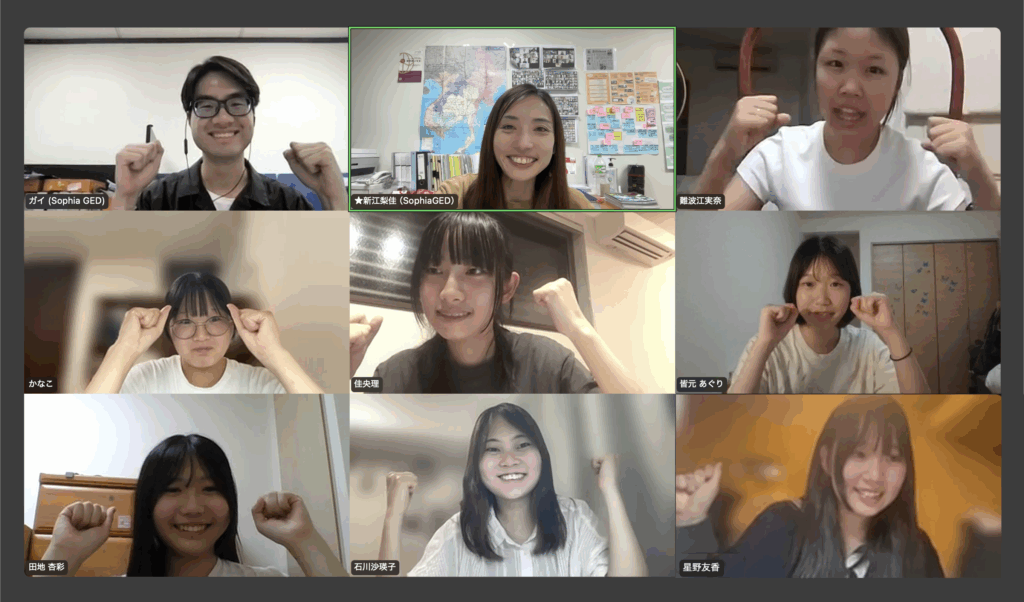
With this year’s success in launching the very first “Sekai Tankyubu Field Program” for students to travel to Bangkok and conduct data gathering relevant to their own research topic during the months of August 2025, Sekai Tankyubu has grown into a new frontier that hopes to further enhance students’ education and skills through new opportunities.

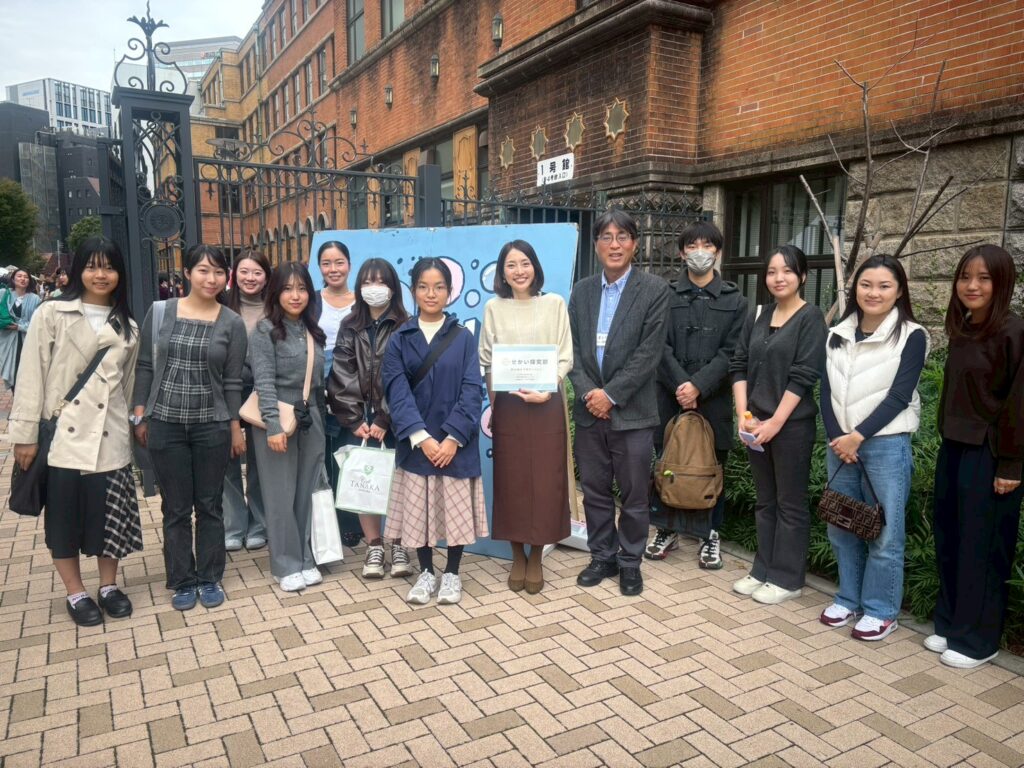
After a full five months of data gathering and refining their research topics, we believe that it would be a wonderful opportunity for all of our students to gather and share with each other what they have acquired during their own time. That is why we choose to hold a face-to-face session for our students of both basic and field programs to actually meet each other in person on November 2nd at Sophia University Yotsuya Campus.

We start the day with our students and staff getting together for the very first time in front of the university gate. It was also a warm reunion for Field Program students and staff since their last gathering in Bangkok, making the atmosphere full of vibrant and lively energy. After an uplifting greeting speech from Prof. Dr. Yasushi Hirosato, we proceed to the location where the session will be held. Along the way, students also get to observe the scenery of Sophia University’s facilities, while absorbing the atmosphere of Cultural Day that was being held on that day at the university simultaneously.


After settling down, the session starts with a small ice-breaker where students give a brief self-introduction to each other and share their research progress so far using a sharing sheet. Once everyone has gotten familiar with each other, the first activity begins with a brief lecture from Dr. Rei Sudoh, Assistant Professor at The University of Tokyo and Chief Instructor of this program, regarding how to structure a research paper to help students organise their ideas and be able to envision the direction of their paper concretely.


With a brief idea of what needs to be done, we let the students start creating an overall flow of their thesis using various papers and sticky notes to visualize each corresponding part of their paper. As the staff walks around offering feedback and guidance, we begin to see where each student is facing challenges, while also being surprised by those who already have a clear direction for their paper. Once each individual has roughly finished their paper structure, we let them present it to their own groups to receive comments and feedback on where to adjust their contents accordingly.
As the first half of the session comes to an end and the students have gotten the proper materials needed to further continue shaping up their thesis, it’s about time for them to have some relaxing moments with their new friends. With the Sophia Festival also being held on the day, it was the perfect opportunity for students to enjoy getting lunch and walking around the campus while seeing university life.

The second part of the day began with a gathering of past Sekai Tankyubu students, who returned to offer advice and share their experiences in the program with our current participants. Ranging from third-year high school to fourth-year university students, many alumni provided valuable insights on thesis writing, especially by giving feedback on the research planning sheets completed earlier. They also shared encouraging messages that greatly lifted the spirits of the current cohort.


Beyond the talk sessions, we prepared one more activity for all students to take part in. Since a core principle of the Sekai Tankyubu program is discovering the world, we believe it is just as important for students to first discover themselves. With that in mind, we provided a large sheet of paper for everyone, inviting them to reflect and write down thoughts based on prompts such as: what they have learned through their research, what they hope to pursue in university, and their aspirations for the future. They then connected these ideas, piecing them together into a bigger picture that reflects how the Sekai Tankyubu program is shaping their personal growth and goals.


With the paper sheet completed, the face-to-face session has finally come to an end. Past students take this moment to reminisce with each other and their teachers, with whom they all share a very strong bond, while the current batch of students talk about what they have received today and hope to strengthen their research using that. With the final closing remarks delivered by Prof. Dr. Hirosato, everyone starts bidding each other farewell while exchanging contact information to keep each other in touch with their new friends made during the day.


On behalf of staff and lecturers overseeing the Sekai Tankyubu program, we were truly impressed and fulfilled by what the students accomplished throughout the day. Seeing everyone give their best, we feel that an important part of our mission has already been realized: helping them grow into capable individuals with a strong sense of global awareness. We hope that the connections and bonds we made with everyone will continue to last long. Finally, we would like to express our sincere gratitude to everyone who participated, as well as those who helped ensure the session ran smoothly and made it a truly wonderful day, especially to Mrs. Erika Atarashi, the Director of Educational program in Sophia GED and Special Assistant Professor at Sophia University for establishing this amazing learning opportunity for all of us.


— The Sophia GED Team


